


Alagille Syndrome
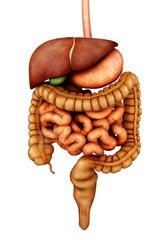 Alagille syndrome is a genetic disorder in which the infant is born with abnormalities in the bile ducts that involve having fewer bile ducts than normal or ducts that are malformed or unusually narrow. Since the purpose of these ducts is to carry bile, the substance that helps digest fats, from the liver to the small intestine and gallbladder, these abnormalities interfere with normal digestion. Because the ducts do not transport bile properly, the substance builds up in the liver and causes damage and subsequent scarring of that vital organ.(cirrhosis). Once the liver is damaged, it fails to filter necessary wastes from the bloodstream and other serious, sometimes life-threatening changes occur.
Causes of Alagille Syndrome
In one third to one half of all cases, Alagille syndrome is caused by a genetic defect which is inherited in a dominant pattern, meaning that only one copy of the altered gene is enough to cause the syndrome. Other cases result from a new mutation where there is no family history of the disorder.
Symptoms of Alagille Syndrome
Alagille syndrome can affect a great many parts of the body, but the severity of the symptoms experienced varies greatly among patients, even those in the same family. Problems usually become evident in infancy or early childhood. While some people may not even be aware that they have the syndrome, others can become severely disabled, so the symptoms below may or may not be present in individual patients:
- Malabsorption and poor growth
- Jaundice, dark urine and light stools
- Itchy skin (pruritus) due to bilirubin buildup
- Xanthomas (harmless skin deposits of cholesterol)
- Heart problems or kidney disease
- Distinctive facial features
- Vascular abnormalities
- Butterfly-shaped vertebrae
- Enlarged spleen due to portal hypertension
Some patients with Alagille syndrome have isolated symptoms of the disorder, such as only distinctive facial features, including deep-set eyes, a small pointed chin and a prominent forehead, or only heart defects, typically a combination of four known as the tetralogy of Fallot. Another sign of Alagille syndrome may be a condition of the eyes known as posterior embryotoxon in which there is a visible ring around the corner which does not normally affect vision.
Diagnosis of Alagille Syndrome
The variable symptoms of this disorder may make it difficult to diagnose, but a preliminary diagnosis is usually made on the basis of three of the listed symptoms and confirmed by a liver biopsy. Other tests may be performed to make assess the severity of the condition or to rule out other disorders. These may include:
- Blood tests for liver function
- Abdominal ultrasound scan
- Blood tests to evaluate nutritional status
- Ophthalmic examination
- X-rays of the spine
- Kidney tests
- Cardiovascular tests
Blood tests to verify and delineate genetic mutations may also be administered.
Treatment of Alagille Syndrome
The primary treatments for Alagille syndrome focus on increasing the flow of bile from the liver and on relieving other uncomfortable or dangerous symptoms. Ursodiol, the only medication approved by the FDA to increase bile flow, is typically administered. Other symptoms may be treated as follows:
- Hydrating moisturizers and special medications to relieve itching
- Administration of a high calorie diet to counteract malabsorption
- Administration of supplemental vitamins
- Surgery to drain bile from the body (a partial external biliary diversion)
When liver damage becomes severe and results in liver failure, a liver transplant may be the only option.